
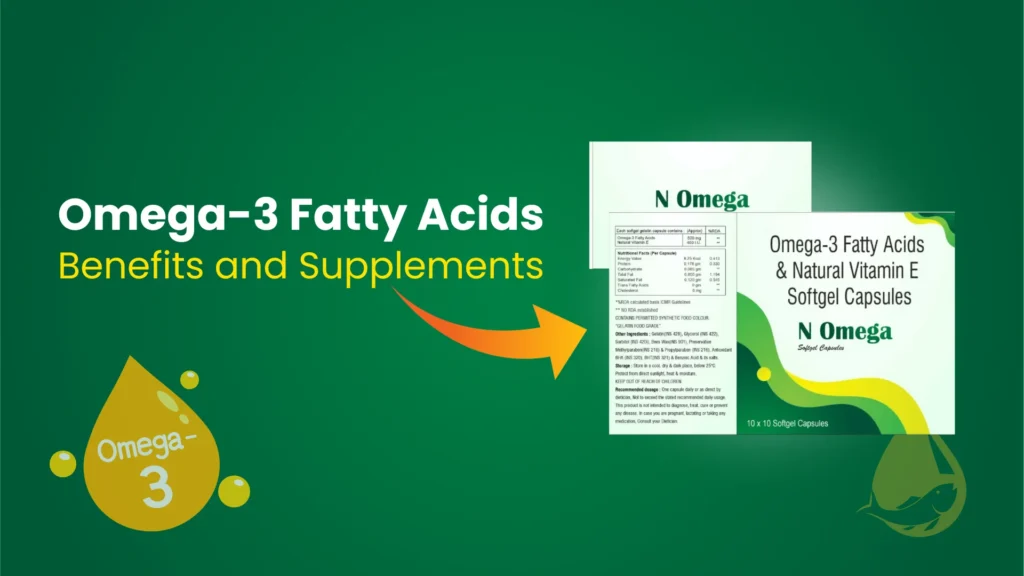
Omega-3 fatty acids are healthy fats that our bodies need but cannot make on their own. They are important for keeping our hearts, brains, and eyes healthy. Learning about omega-3s and how to add them to your diet through food or supplements can help you stay healthy.
What Are Omega-3 Fatty Acids?
Omega-3 fatty acids are a type of fat that is good for your body. There are three main types:
EPA (Eicosapentaenoic Acid): In fish like salmon and mackerel, EPA helps keep your heart healthy and reduces swelling in the body.
DHA (Docosahexaenoic Acid): Also found in fish, DHA is very important for your brain and eyes.
ALA (Alpha-Linolenic Acid): Found in plant foods like flaxseeds, chia seeds, and walnuts, ALA can be turned into EPA and DHA, but only in small amounts.
How Do Omega-3 Fatty Acids Help?
Keeps Your Heart Healthy:
Omega-3s can lower fats in the blood, reduce blood pressure, and improve the function of the arteries. This helps lower the chances of heart attacks and strokes.
Supports Brain Health:
DHA is a key part of the brain. Getting enough omega-3s can help with memory and focus and may lower the risk of brain diseases like Alzheimer’s.
Reduces Swelling:
Chronic swelling can lead to diseases like arthritis and diabetes. Omega-3s help reduce swelling and improve overall health.
Helps Your Eyes:
DHA is important for your eyes. Eating enough omega-3s can help keep your vision clear and reduce the risk of eye diseases as you age.
Improves Mental Health:
Omega-3s may help with depression and anxiety. EPA, in particular, is thought to have a calming effect.
Important for Pregnancy and Babies:
Omega-3s help in the development of a baby’s brain and eyes. They are also good for the health of pregnant and breastfeeding mothers.
Foods That Have Omega-3 Fatty Acids
The best way to get omega-3s is by eating the right foods. Here are some examples:
Fish and Seafood: Salmon, sardines, mackerel, and anchovies are rich in EPA and DHA.
Plant Foods: Flaxseeds, chia seeds, walnuts, and hemp seeds are good sources of ALA.
Fortified Foods: Some eggs, milk, and yogurt have added omega-3s.
Algae: Algal oil, made from algae, is a good source of DHA and EPA for vegetarians and vegans.
Get NOmega At Your Finger tips!
Experience seamless access to N Omega’s cutting-edge features anytime, anywhere. Stay ahead, stay connected, and stay in control – all at your fingertips!
Get Now!Should You Take Omega-3 Supplements?
If you don’t eat enough omega-3s, supplements can help. Here are some common options:
Fish Oil:
Fish oil supplements are a popular choice. They contain EPA and DHA and come in liquid or capsule form. Look for purified products to avoid contaminants like mercury.
Krill Oil:
Krill oil is made from tiny shrimp-like animals. It’s easy for the body to absorb and also contains antioxidants.
Algal Oil:
This is a plant-based source of DHA and EPA, making it a good choice for vegetarians and vegans.
Flaxseed Oil:
Flaxseed oil provides ALA. However, since ALA doesn’t convert well to EPA and DHA, it might not be as effective as fish or algal oil.
How to Pick the Right Supplement
When choosing a supplement, keep these things in mind:
Check the Label: Look for how much EPA and DHA it contains.
Purity: Make sure it’s tested for harmful substances.
Absorption: Omega-3s in triglyceride form are absorbed better.
Sustainability: Choose brands that source their fish or algae responsibly.
How Much Omega-3 Do You Need?
How much omega-3 you need depends on your age and health. General recommendations are:
Adults: 250-500 mg of EPA and DHA daily.
Pregnant or Breastfeeding Women: 200-300 mg of DHA daily.
Talk to your doctor if you’re unsure how much you need.
Conclusion
Omega-3 fatty acids are a key part of a healthy diet. They help your heart, brain, eyes, and more. Eating foods rich in omega-3s is the best way to get them, but supplements can help if needed. Knowing what omega-3s do and how to get them can make a big difference in your health.